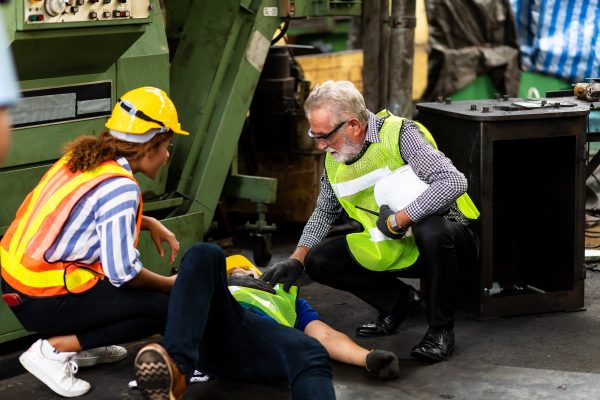
An accident at work leading to injury; or medium to long-term occupational ill-health will hurt not only your people… it will hurt your business!
You can reduce the potentially high costs of an accident – you can control the hurt. Read on to learn some of the steps that you must take as an employer.
Accidents are best described as being unplanned and undesired events that lead to injury to persons, or damage to plant, property and equipment.
“Neglecting health & safety is the ultimate false economy… insurance may provide cover for the costs associated with injuries, ill health, or damage resulting from an accident…. but there will be other uninsurable costs such as fines, lost time, sick pay; as well as the impact on the business’s reputation, which may be irrecoverable. If you think safety is expensive, try an accident…!
Responsibility for health and safety within any company is not exclusive to a designated manager within the business. Every manager and indeed all employees have some legal duties in this area. These responsibilities should be incorporated into the job description for each position and job title within a company. The responsibilities of the appointed Competent Person, advising the employers on Health & Safety matters should be set out within the company’s health and safety policy.
The Health and Safety at Work etc. Act 1974 (the Act) is the primary health and safety law in the UK; setting down duties on employers and employees; and to a lesser degree, on the self-employed and manufacturers and suppliers. The Act is often referred to as being “enabling legislation” as it allows Parliament to introduce other health and safety Regulations (Statutory Instruments or SI’s) under the ‘umbrella’ of the Act.
A breach of the requirements of the Act (and other Health & Safety Regulations introduced under the Act) is generally seen by the Courts as being a very serious matter, as can be evidenced by the very high penalties that can now be imposed by the ‘lower court,’ i.e. the Magistrates Court.
The Employer’s General Duty of Care
The most important and broad ranging duty of care must be fulfilled by employers and is described under section 2(1) of the Act thus:
It shall be the duty of every employer to ensure, so far as is reasonably practicable, the health, safety and welfare at work of all his employees.
As well as a duty to employees, employers have responsibility towards certain non-employees such as visitors, contractors and also the general public. This duty may be in relation to their overall safety or more specific concerns such as safe access and egress or the information and training provided.
Other legislation addresses the health, safety and environmental risks, extending duties beyond protection of defined categories of person to focus on a work process, work procedures or the design of premises.

Leading experts in print, promotional clothing, staff uniforms, branded merchandise and PPE. Involution is your brand partner for promotional marketing and workwear, a one-stop-shop for your branded marketing needs for any business size and industry.
A range of regulations requires risk assessments, not only the Management of Health and Safety at Work Regulations 1999. Therefore, specific legal duties and requirements will need to be considered when risk assessments are completed. The employer is legally obliged to ensure that risk assessments are undertaken. While ultimate responsibility rests with the employer, the task of risk assessment is likely to be delegated.
The general duty of care which employers owe to their employees under s.2(1) is defined in more detail in s.2(2)(a) to (e) of the Act and includes:
(a) The provision and maintenance of plant and systems of work that are, so far as is reasonably practicable, safe and without risk to health
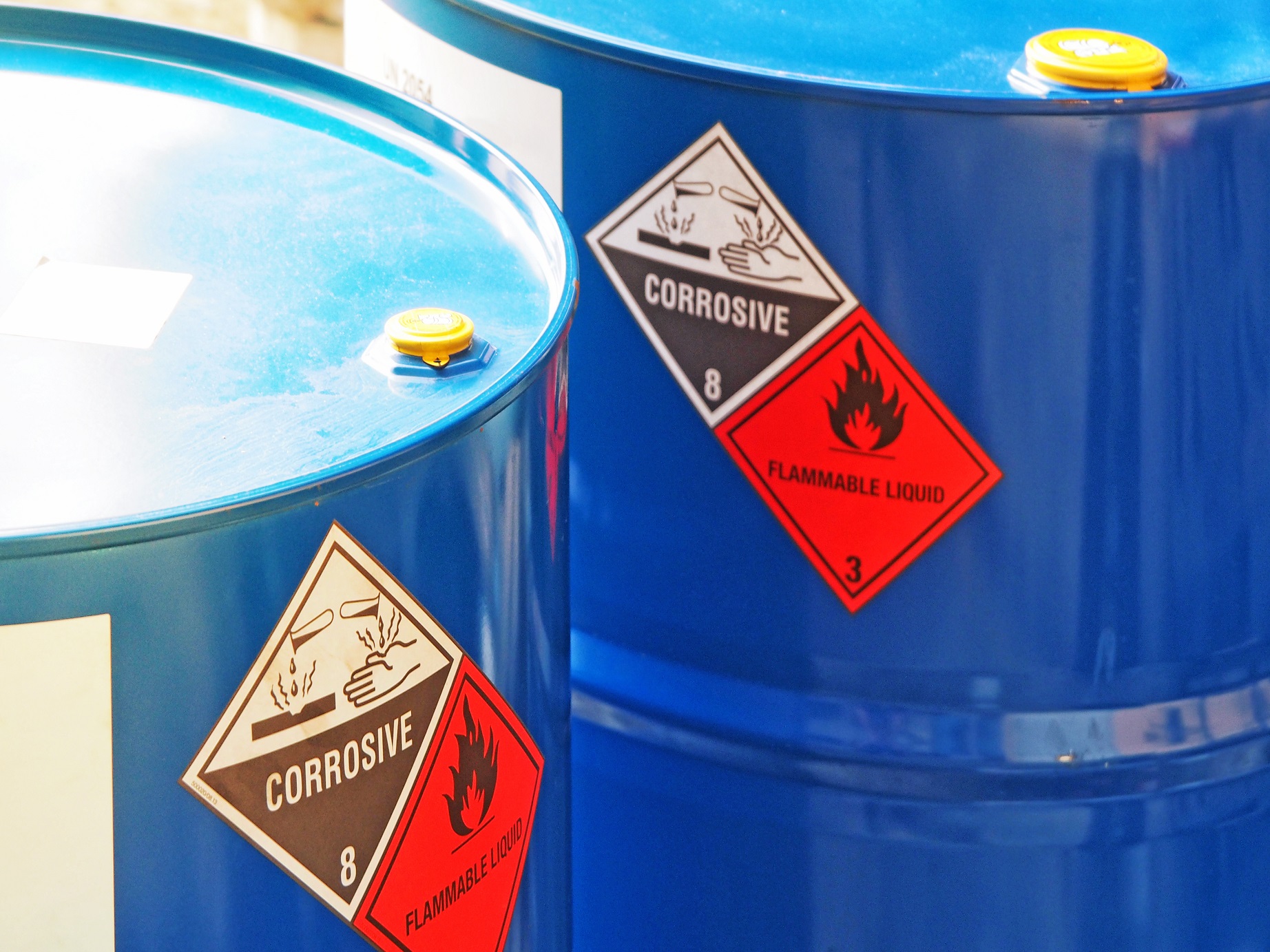
(b) Arrangements for ensuring, so far as is reasonably practicable, safety and absence of risks to health in connection with the use, handling, storage and transport of articles and substances
(c) The provision of such information, instruction, training and supervision as is necessary to ensure, so far as is reasonably practicable, the health and safety at work of employees
(d) The maintenance of any place of work under the employer’s control in a condition that is safe and without risks to health and the provision and maintenance of means of access to and egress from it that are safe and without such risks, so far as is reasonably practicable
(e) The provision and maintenance of a working environment for employees that is, so far as is reasonably practicable, safe, without risks to health and adequate as regards facilities and arrangements for their welfare at work.
The Act tells employers (and others) about their legal obligations in terms of the standards which must be achieved and therefore, by implication, the standards which they must meet. The Act gives no technical guidance on these standards and gives it gives little by way of practical advice for employers, other than the five general items listed above from s.2(2). Indeed, the requirements under section 2(2) are only examples of the duties which must be fulfilled in order to ensure full compliance with section 2(1) and are not intended to be more important than any other health and safety standards or concerns. It is the general duty placed under section 2(1) which is the vital standard to be achieved.
The Act has been widely publicised as being based upon self-regulation and the Management of Health and Safety at Work Regulations 1999 (MHSWR) provide employers with a strategy so as to comply with the general requirements of the Act and putting greater emphasis on risk assessment for each workplace hazard. The combination of these requirements equates to safety assurance, i.e.
• Self-assessment of risk The likelihood of harm and the probable consequences) and
• Self-regulation of risk control.
To fill in the practical implications of these requirements, employers must turn to regulations made under the Act and the associated Approved Codes of Practice and Guidance Notes. Much of this is freely available to employers via the HSE website.
Duties Owed to Non-Employees
Section 3 of the Act places general duties on all employers and the self-employed to conduct their undertakings (their work activities) in such a way as to ensure, so far as is reasonably practicable, that persons other than themselves or their employees (i.e. non-employees, members of the public and even trespassers) are not exposed to risks to their health or safety.
For section 3 to apply there must be a duty-holder (either an employer or a self-employed person) and there must be a risk to the health or safety of a person who is not the employee of the duty holder or the self-employed duty holder themselves, and that risk must arise from the conduct of the duty holder’s undertaking.
An ‘undertaking’ means ‘enterprise’ or ‘business’. Whether a particular activity is part of the conduct of the undertaking is determined by the facts of each case. Although not decisive in every case, whether the duty-holder can exercise control over both the conditions of work and where the activity takes place is very important.
Other regulatory provisions that place duties on employers in respect of non-employees include:
• Regulation 3 under the Management of Health and Safety at Work Regulations 1999; (a suitable and sufficient risk assessment and the risk to non-employees;)
• Regulation 3 of the Control of Substances Hazardous to Health Regulations 2002 (as amended)
• Regulation 4 of the Control of Major Accident Hazards Regulations 1999.
Allocation of Responsibilities
The employer has overall responsibility for ensuring satisfactory standards of health and safety at a place of work and effective Health & Safety management processes. In this context, the employer is defined as the corporate body (e.g. a Limited company), or a partnership, the Sole Proprietor or Owner of a business.
The Employer’s Liability
The employer may incur liability for health and safety in one of two ways.
1. The employer is personally liable for accidents that result from the acts or omissions of the employer.
2. The employer is vicariously liable for accidents that result from the acts or omissions of his or her employees. This liability could extend under common law to the payment of compensation to injured employees.
Where any offence under section 2 of the Act (and any the relevant statutory provisions) is committed by a body corporate if it is proven to have been committed with the consent or connivance of; or to have been attributable to any neglect on the part of, any director, manager, secretary, or other similar officer of the body corporate then he/she; as well as the body corporate, shall be guilty of that offence and shall be liable to be proceeded against and punished accordingly. This personal liability is established under Section 37 of the Act. This particular section of the Act is strongly worded, referring to offences which are committed with the consent of, or are due to the neglect of an officer of the company such as a director, manager or secretary.
Clearly, a judgement made by an individual that is reasonable at the time, but is later proved to be incorrect; is not the same as a hurried, ill-judged decision made in order to save time.
Any persons who accept a position with delegated health and safety responsibilities (i.e. a manager with delegated Health & Safety functions) will be expected by their employer and by the enforcing inspector to make correct decisions. This assumes, of course, that they have been given sufficient training, that the training has been validated and that they have been given sufficient time and facilities to undertake their job properly.
The most likely circumstance where the question of a personal prosecution of a manager could arise is when an offence committed by his or her employer is attributable to the neglect of the same manager.
Personal responsibility on the part of managers will be questioned if an accident occurs or enforcement action is taken in circumstances where their acts or omissions may have contributed towards any accident. If this occurs; managers will need to demonstrate that they made decisions that were reasonable for a person with their authority and expertise. Managers will also need to demonstrate that they did all that they reasonably could to ensure that their instructions etc. were actioned.
In order to have the maximum impact on working conditions, thereby reducing accidents and the possibility of enforcement action, individual managers must ensure that their instructions etc. are well documented. Such actions will not only improve safety standards and achieve a higher standard of compliance with legislation, but will also reduce the possibility of a personal prosecution against the manager concerned.
Appointing an External Competent Person
Apart from appointing a member of staff as health and safety manager, many employers will also wish to appoint an external health and safety consultant to provide advice.
Any consultant engaged will be appointed under regulation 7 of the MHSWR. When an external consultant is appointed it is clear that the employer will wish to depend on the professional skill and expertise of that consultant. A prudent employer would ensure that the appointed consultant is competent and would check that the consultant has sufficient training, expertise, a proven track record and also adequate professional indemnity insurance.
Provided that adequate procedures for vetting and monitoring the work of consultants are in place, employers can realistically deflect liability on to an external expert should enforcement action be taken as a result of the consultant’s neglect.
When an external health and safety consultant gives incorrect advice, the employer will be able to seek redress in a way that is appropriate to the circumstances in which the incorrect advice was given. However, if a person the role of the Health and Safety Manager (an employee) gives incorrect advice, then the responsibility will be shared between the employer and the appointed Health and Safety Manager.